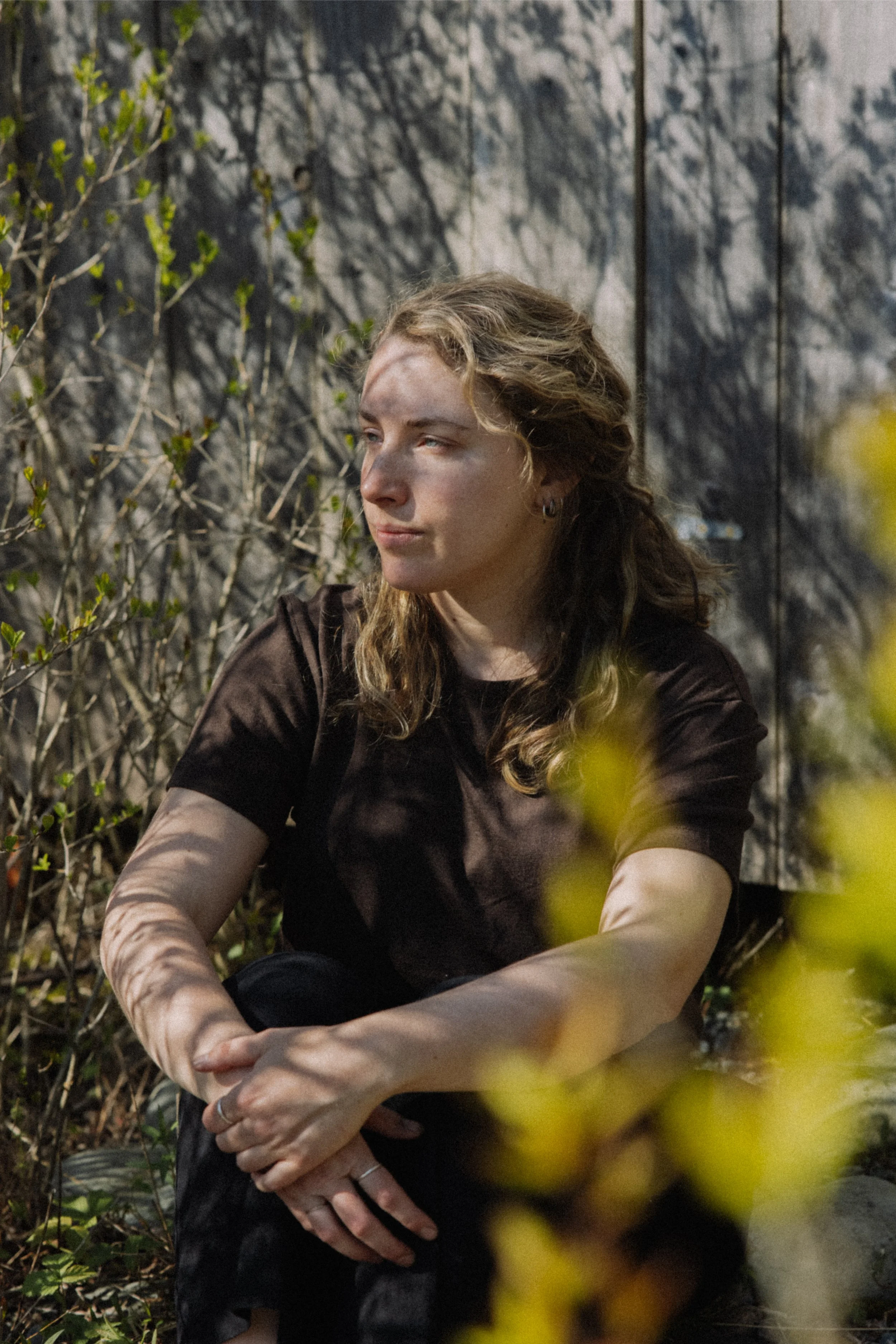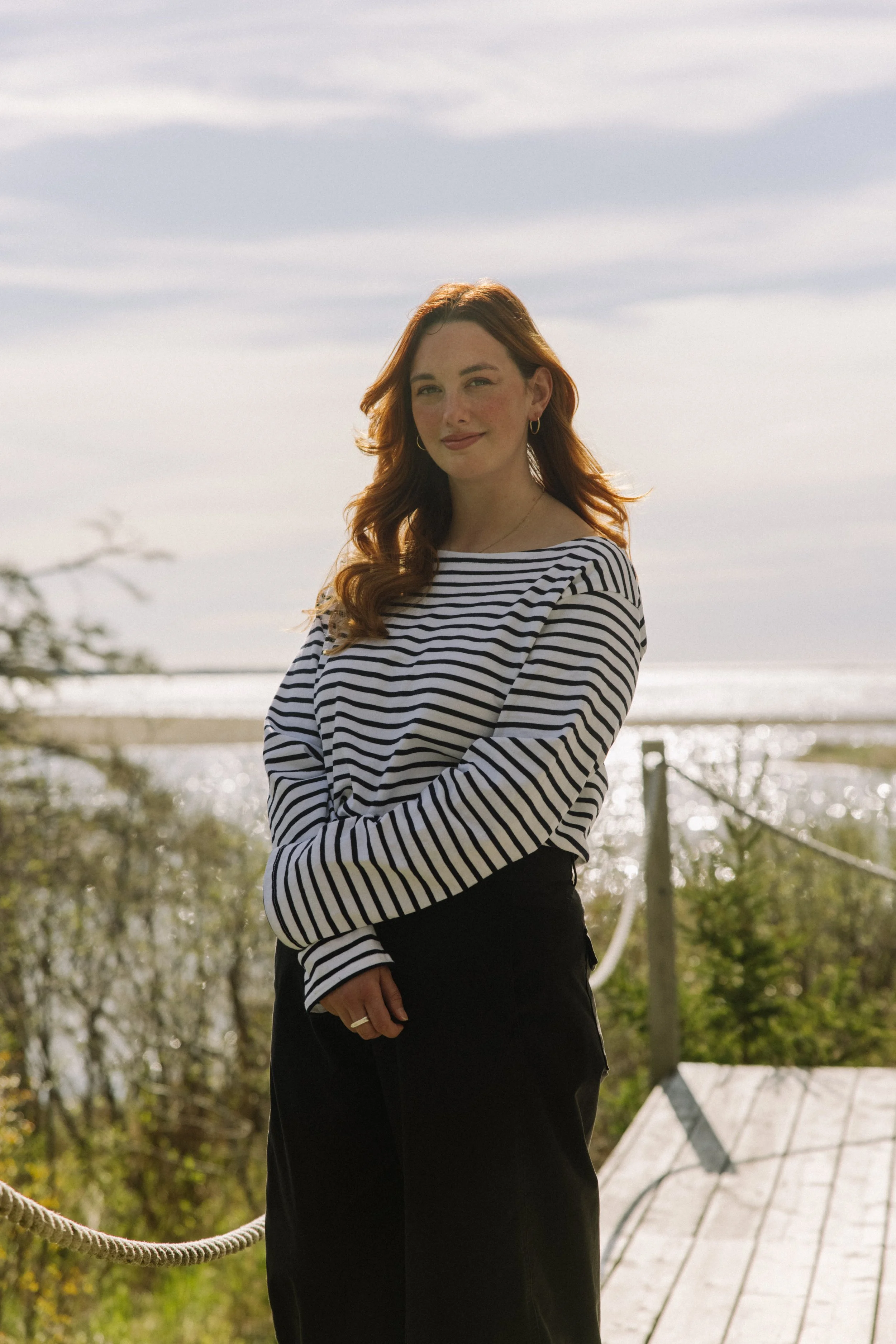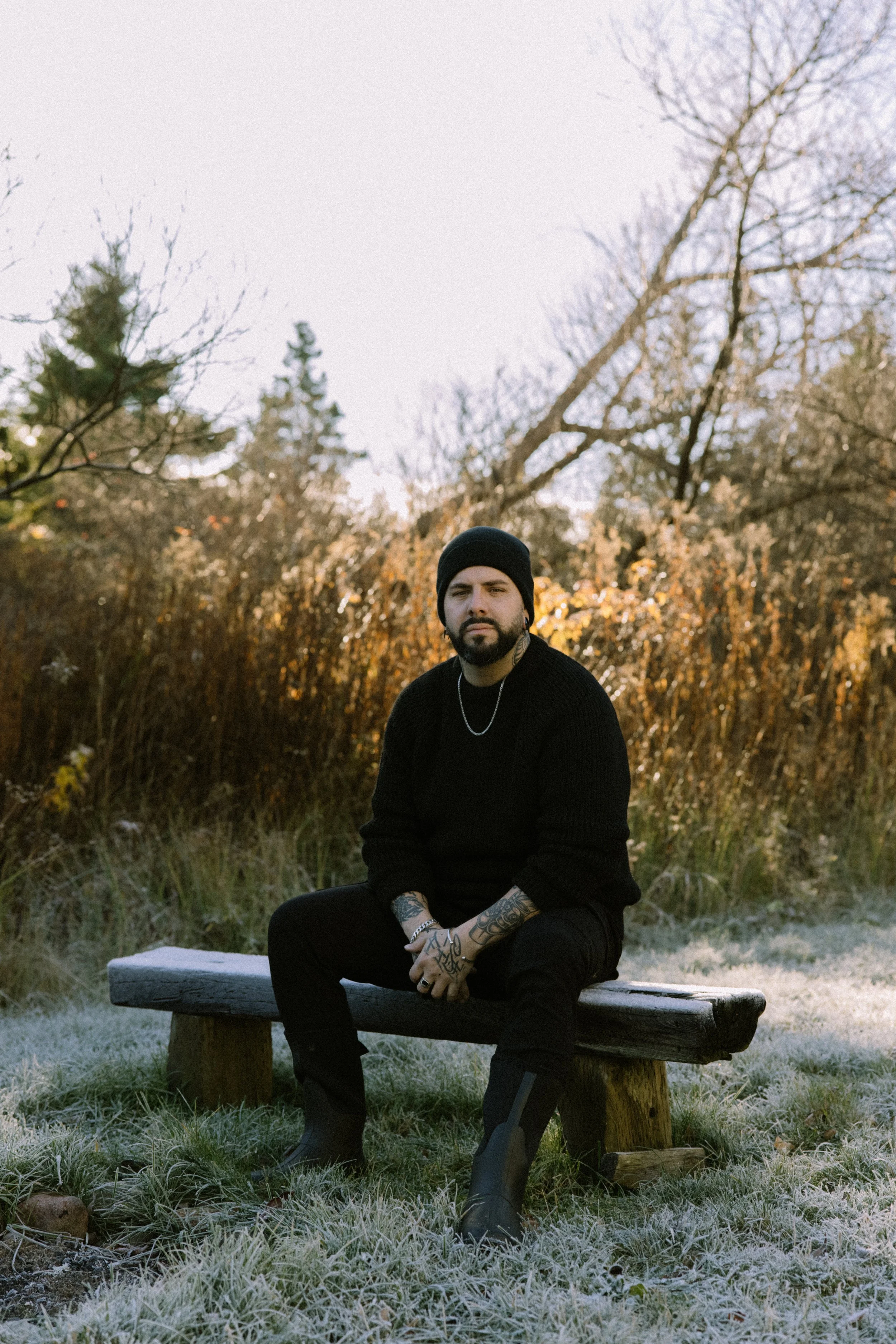
Yann Lemieux
Entrevue et photographie / Catherine Bernier
En collaboration avec Milo & Dexter
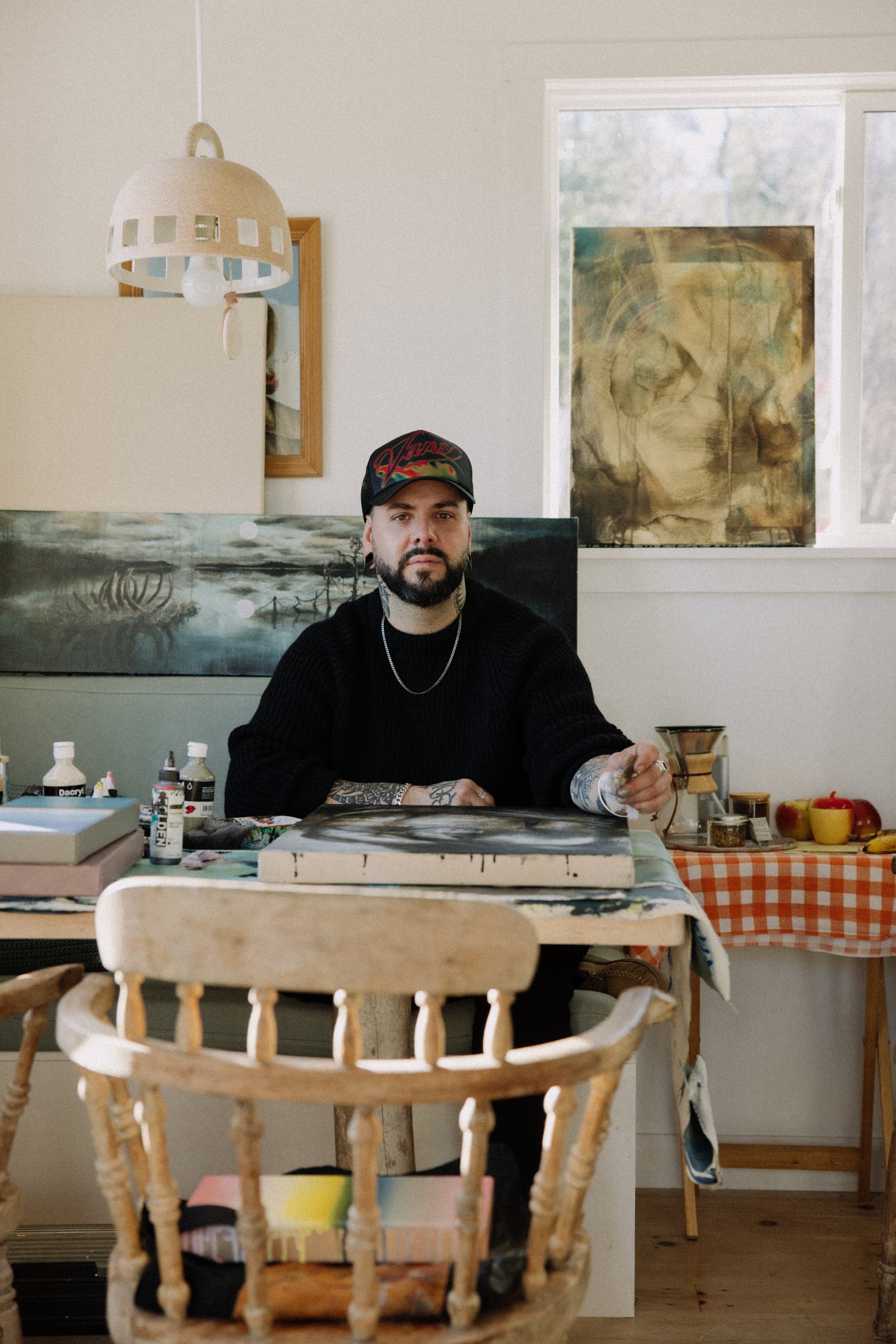
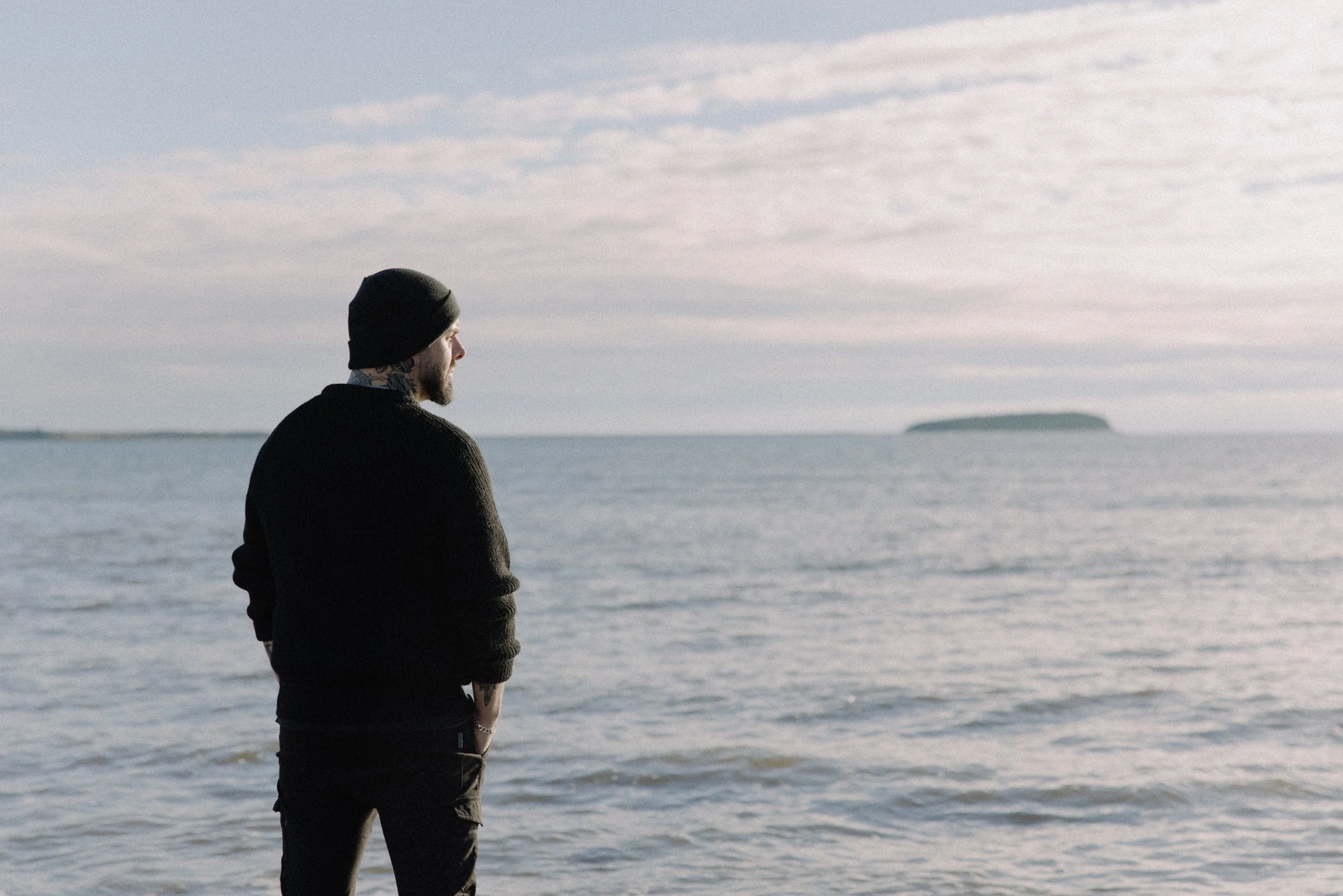
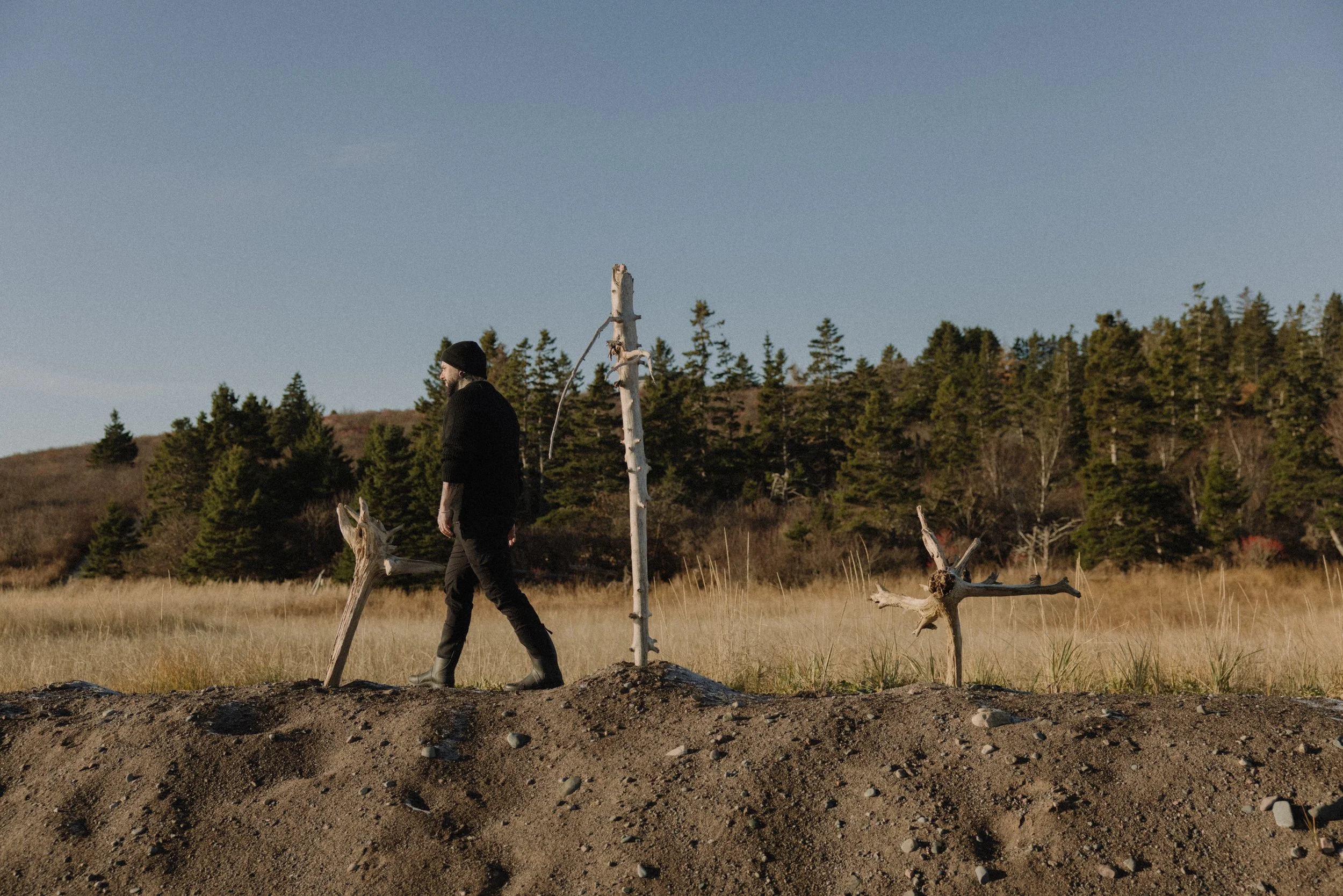
La pratique de Yann Lemieuxrepose sur la discipline de la présence — le retour à l’atelier, au geste et à l’acte de peindre, comme moyen de préserver à la fois la clarté et l’élan créatif. Sa résidence à Seaforth est née d’un besoin de s’éloigner momentanément de son rythme quotidien pour renouer avec cet espace essentiel de la création. Sur la côte néo-écossaise, le temps s’écoule différemment : des matins plus lents, de longues balades en voiture le long du littoral, et une attention croissante à ce qui se dévoile lorsque rien n’est imposé.
Réputé pour une pratique ancrée dans l'engagement physique et l'intensité soutenue, Lemieux a laissé le paysage, la solitude et la distance modifier subtilement ses repères. Ce qui s'est produit n'était pas une rupture, mais une expansion tranquille — une expansion qui a à la fois approfondi et réaffirmé les fondements de son œuvre.
Dans cet entretien, il s'interroge sur le geste, l'ancrage et ce que signifie sortir de son atelier pour renouer avec ce qui compte le plus.
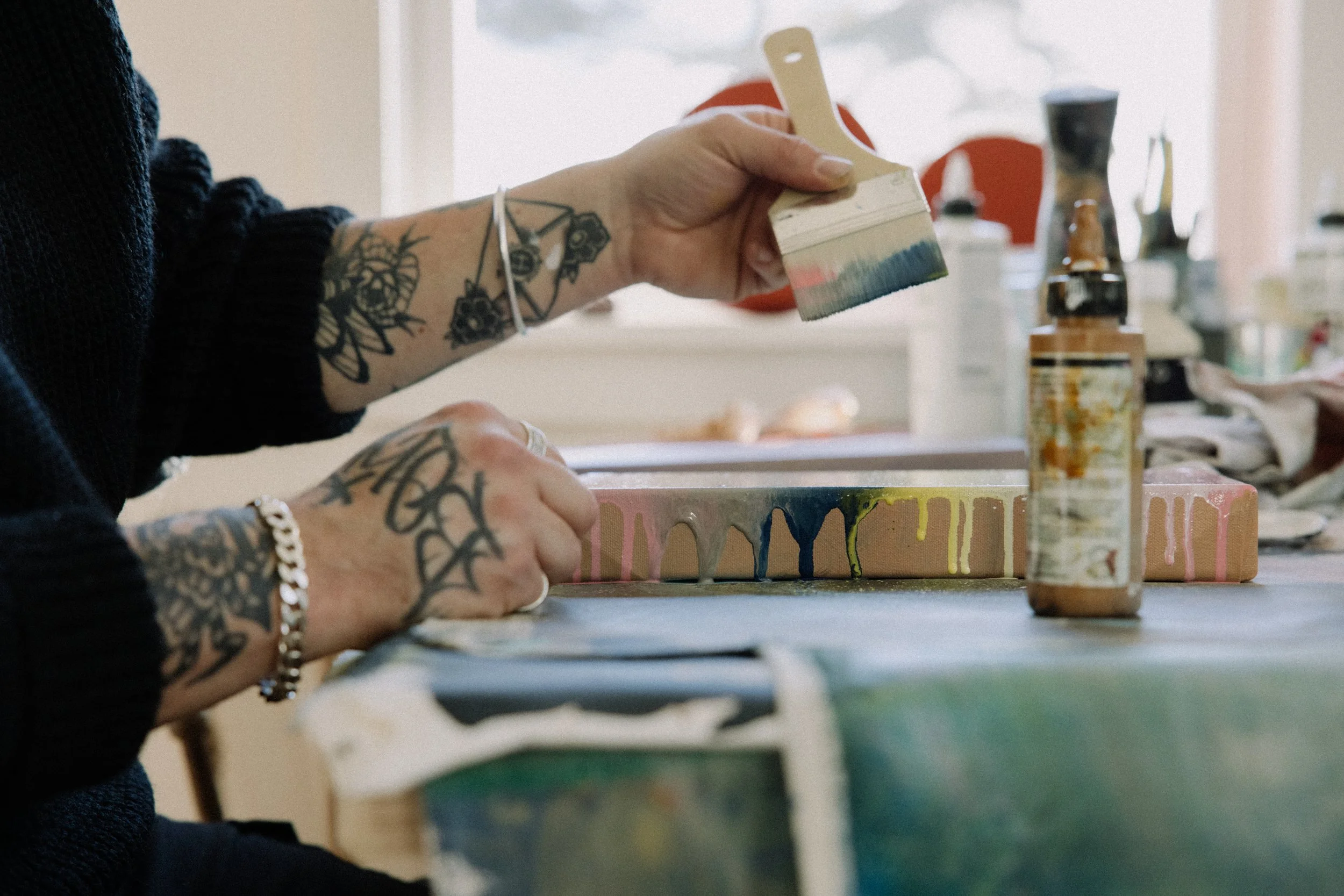
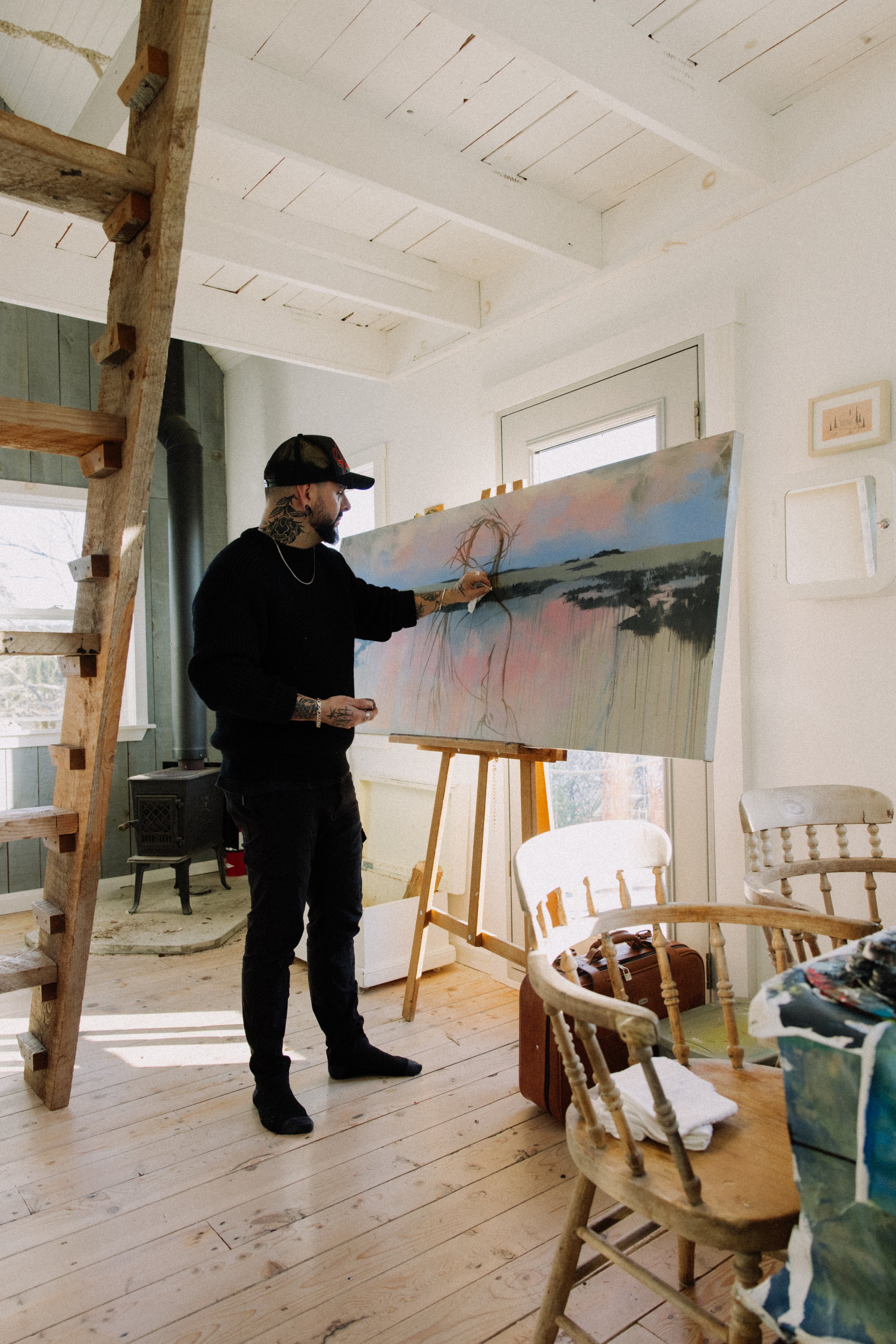
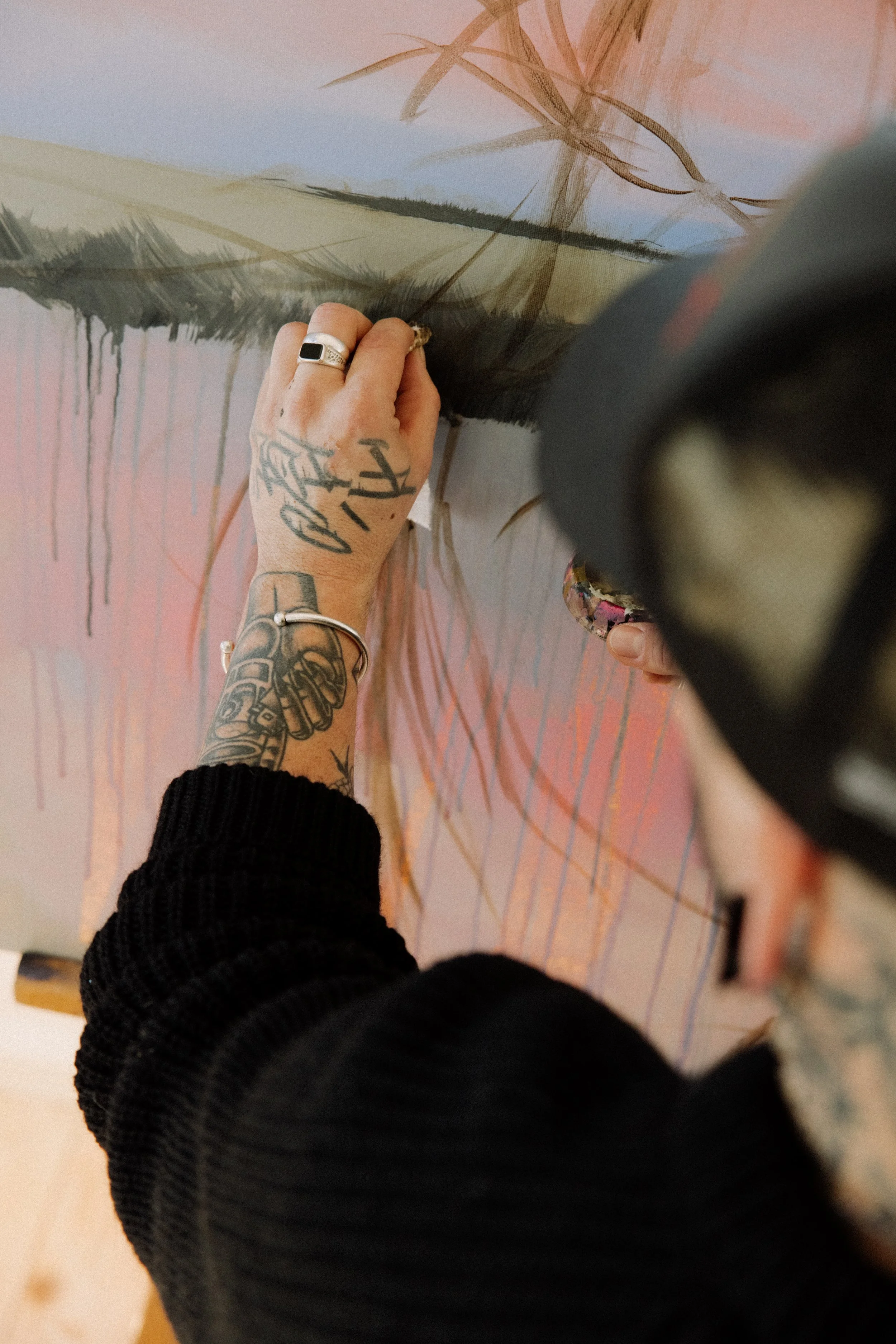
Parlez-nous de vous et de votre cabinet.
La peinture reste mon moyen d'expression principal. Ma pratique s'étend aux toiles, aux murs et aux objets, et se caractérise par une quête d'intensité et d'excès : grands formats, contrastes marqués et compositions chargées de tension, d'énergie et de puissance.
Un besoin constant d’émancipation personnelle traverse mon travail. Plus que l’intention ou le sujet, c’est l’acte de création lui-même qui occupe une place centrale. C’est par le geste — par la pratique — que j’aborde ces questions. Dans ma pratique, la création précède le discours.
En quoi votre parcours culturel ou votre histoire personnelle influencent-ils votre pratique ?
Ma pratique s'inspire avant tout de mon parcours personnel et de ma relation au geste. Ayant grandi au Québec, j'ai évolué dans un contexte où l'identité se construit par l'action — à travers le travail, la discipline et l'expérimentation. Cette dynamique influence directement ma manière de peindre.
J'aborde le portrait comme un terrain d'exploration formelle plutôt que comme une représentation psychologique. Les figures me permettent d'explorer la matière, le mouvement et l'énergie de la ligne. La superposition, le contraste et la rapidité d'exécution sont au cœur de ma démarche.
Mon parcours n'est pas un sujet en soi, mais un fondement. Il façonne ma relation au corps, au rythme et à la présence, tant en studio que sur scène. Mon travail s'épanouit à travers la construction, l'intensité et la maîtrise du geste.
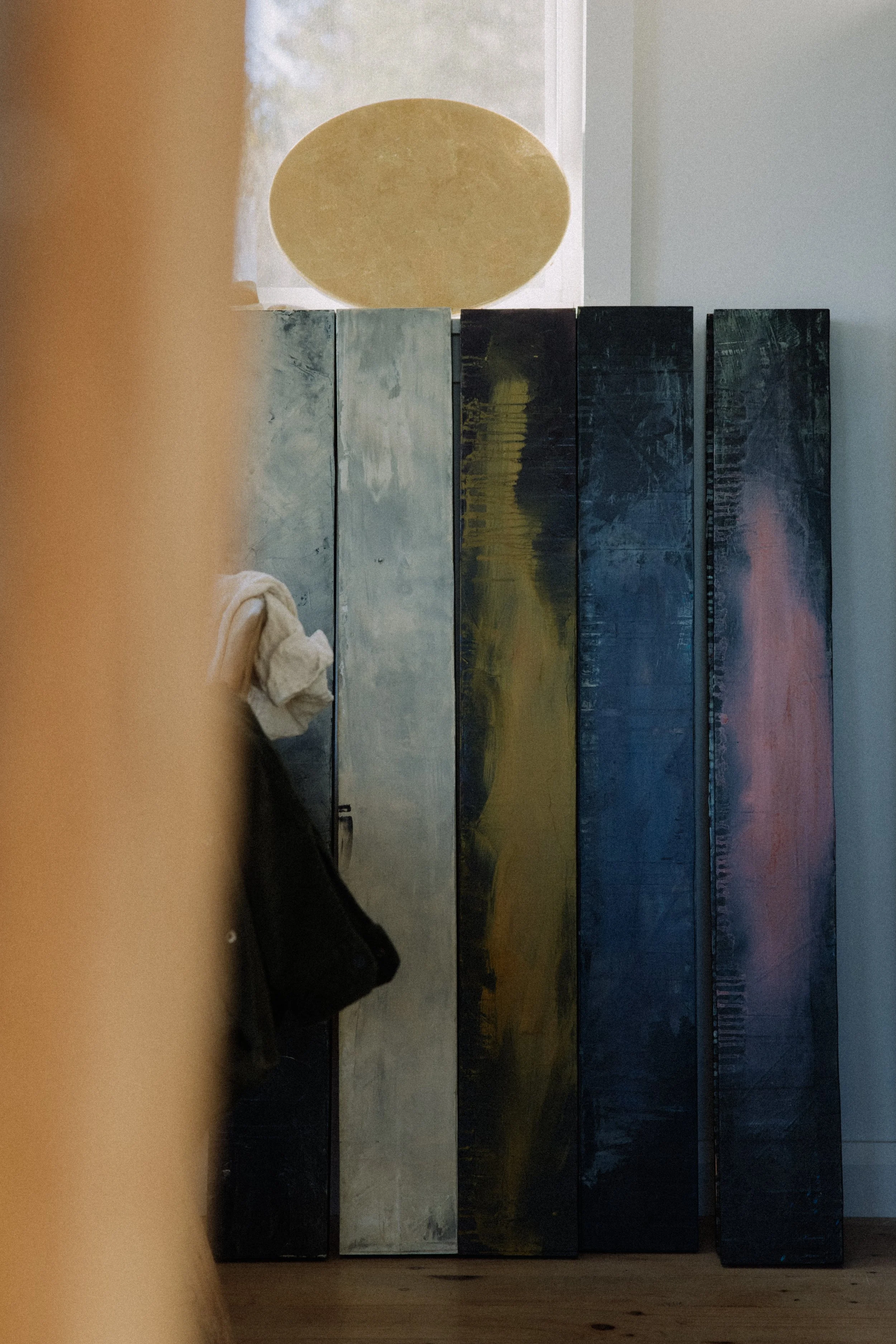
Quelles étaient vos intentions pour cette résidence et comment s'est-elle déroulée ?
Mon intention était de renouer avec ma pratique personnelle. Depuis plusieurs années, je consacre une grande partie de mon temps à la médiation culturelle, en travaillant auprès de jeunes en situation de marginalisation et de personnes en situation de handicap. Le fait d’utiliser la création comme outil d’engagement donne un sens profond à mon travail.
Cependant, les occasions de créer pour soi-même ont tendance à se faire plus rares dans ce rythme. J'ai vu cette résidence comme une occasion de me déconnecter des exigences extérieures et de revenir à mon propre besoin de créer — d'exister pleinement dans l'acte de peindre.
Je voulais aussi quitter mon atelier et ma ville pour puiser l'inspiration dans un environnement totalement différent.
Pourriez-vous nous décrire une journée type pendant votre internat ?
Mon programme consistait justement à ne pas en avoir. Je me suis laissé guider par mon intuition, alternant entre exploration et création. J'ai passé mon temps à me promener le long du rivage, à faire le tour des friperies, à sillonner les routes côtières et à photographier tout ce qui attirait mon attention.
Les premiers jours, je peignais à peine. Je laissais les idées émerger naturellement, sans me mettre la pression. Puis, vers la fin, quelque chose a changé. J'ai cessé d'explorer et je me suis entièrement consacré à la peinture — du matin au soir.
En quoi le paysage ou l'atmosphère de Seaforth ont-ils influencé votre processus créatif ?
L'environnement a eu un impact profond. Pour la première fois, le paysage est devenu un élément central de mon travail. Il n'était plus seulement une référence, mais une présence au sein même des tableaux.
Le rythme paisible de Seaforth m'a ouvert un espace — un espace pour observer, pour m'imprégner et, finalement, pour transformer ce que je voyais en quelque chose qui s'inscrivait pleinement dans mon langage visuel.
Y a-t-il un support ou une technique que vous avez testé et que vous n'aviez jamais essayé auparavant ?
Je suis resté fidèle à la peinture, mais le sujet lui-même — le paysage — est devenu un terrain d'expérimentation.
Au début, j’ai essayé de représenter fidèlement ce que je voyais, mais je ne me reconnaissais pas dans ces images. Le tournant s’est produit lorsque je me suis autorisé à transformer le paysage — à l’intensifier, à le déformer et à y introduire des éléments inattendus. La frontière entre le réel et l’imaginaire a commencé à s’estomper. C’est alors que quelque chose de nouveau a émergé.
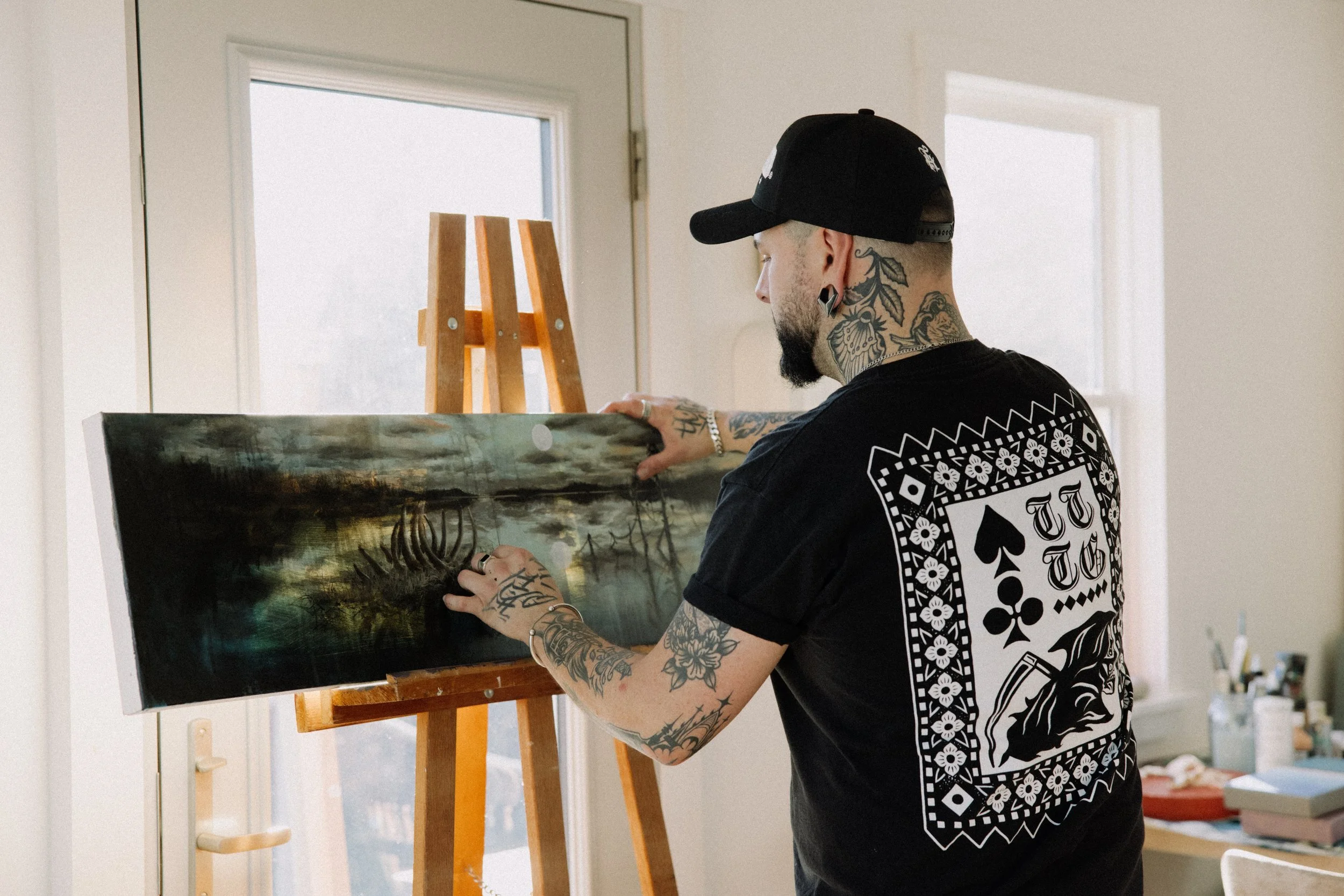
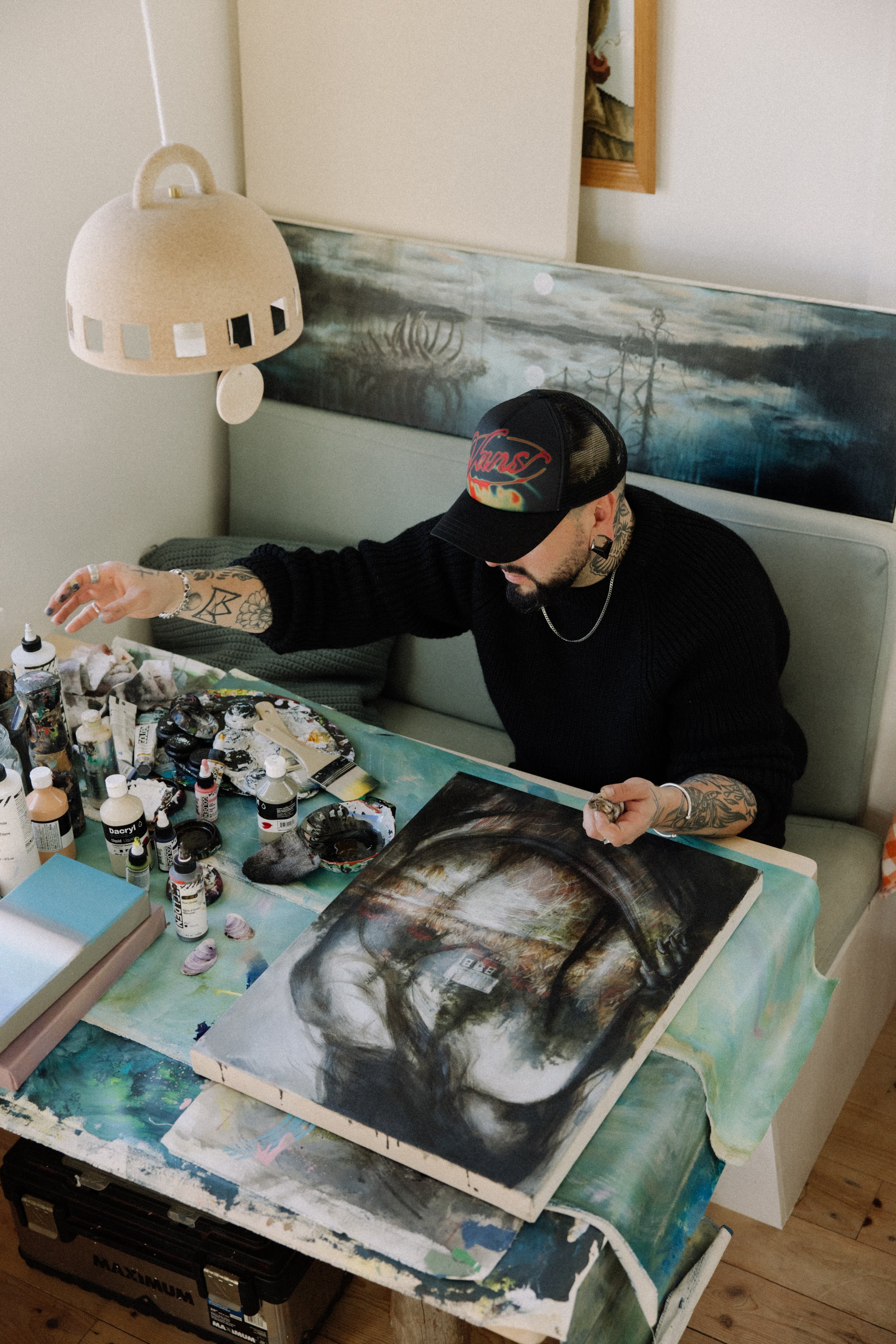
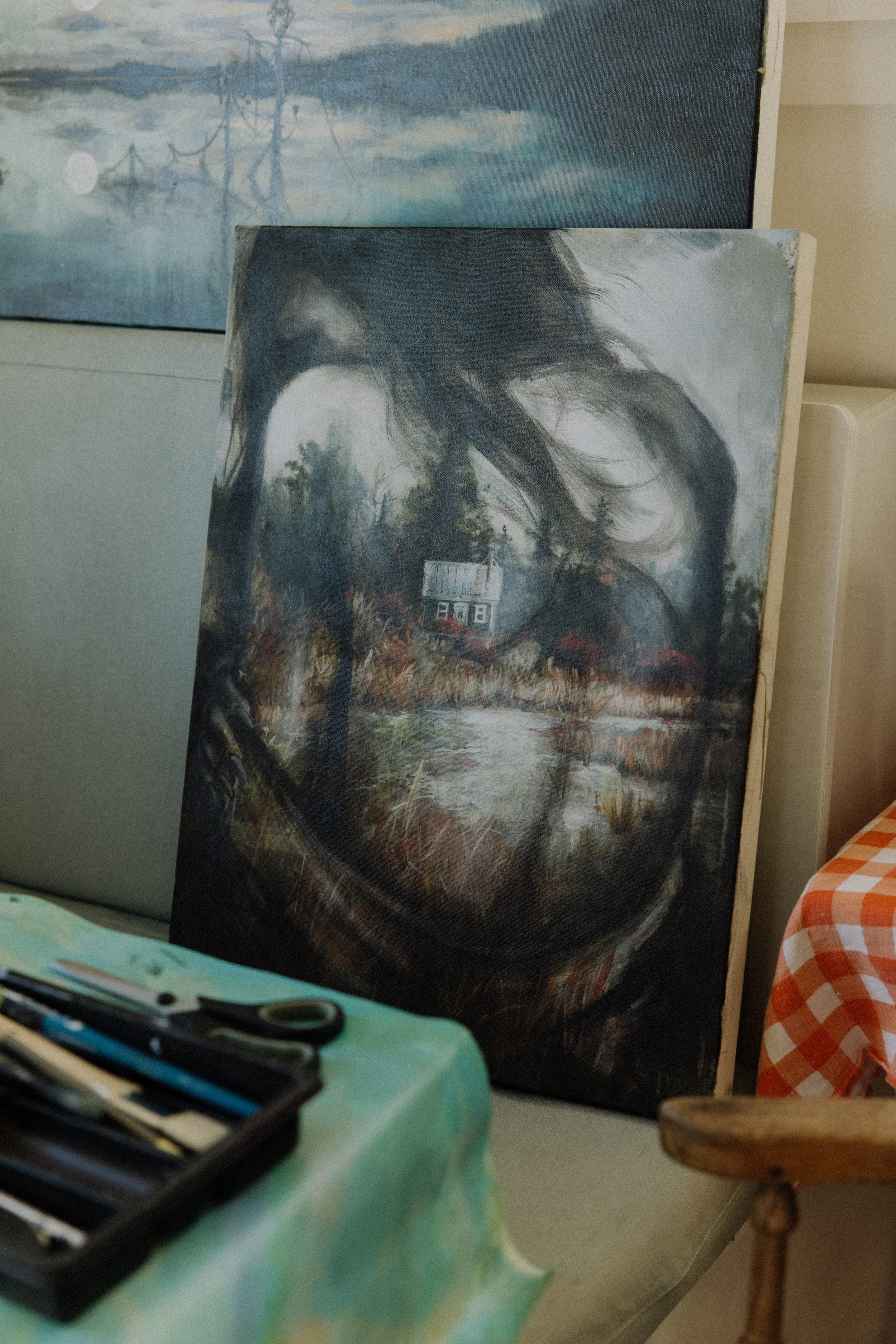
« Pour la première fois, le paysage a pris une place centrale dans mon travail. Il n’était plus seulement une référence, mais une présence au sein même des tableaux. »
- Yann
Qu'est-ce qui vous a posé le plus de difficultés pendant cette résidence ?
Le plus grand défi a été de trouver un équilibre entre l'ouverture d'esprit et la force de mon langage artistique existant. Je voulais prendre des risques, m'aventurer vers l'inconnu. Mais j'ai pris conscience à quel point j'étais déjà profondément ancré dans ma pratique.
Cette prise de conscience était à la fois rassurante et déroutante. Elle confirmait la cohérence de mon travail, tout en me poussant à rompre avec mes habitudes et à m'accorder davantage de liberté.
Comment considérez-vous l'art comme un pont entre les personnes, les cultures ou les générations ?
On dit souvent qu’une image vaut mille mots, mais elle vaut aussi mille émotions. L’art crée des liens immédiats qui transcendent les barrières de la langue, de l’âge ou de la culture.
Grâce à la médiation culturelle, je constate à quel point le fait de créer ensemble permet de tisser des liens. Quel que soit le résultat, l'acte en lui-même crée un sens commun et des liens durables.
Avez-vous trouvé l'inspiration dans vos conversations ou vos rencontres avec les habitants ?
Oui, tout à fait. Mon rythme tranquille et le fait que je prenais sans cesse des photos intriguaient souvent les gens. Une fois qu’ils comprenaient pourquoi j’étais là, les conversations devenaient chaleureuses et cordiales.
Ces rencontres m'ont permis de découvrir des endroits cachés que je n'aurais jamais trouvés autrement. Elles ont fait partie intégrante de la résidence et de l'œuvre elle-même.
Cette résidence a-t-elle changé quelque chose dans la façon dont vous percevez votre propre pratique ou vos futurs projets ?
Tout à fait. Cette résidence a ravivé mon envie de sortir de ma routine et de partir à la recherche de nouveaux horizons créatifs. C'était ma première résidence depuis plus de dix ans, et elle a marqué un tournant.
Peu après mon retour, j'ai commencé à organiser une nouvelle résidence avec d'autres artistes. Cela m'a confirmé à quel point ces espaces sont essentiels à l'épanouissement et au renouveau.
Quel petit souvenir personnel de votre séjour ici emporterez-vous avec vous en rentrant chez vous ?
Le sentiment d'une véritable solitude. Se trouver dans un petit havre de paix, loin des gens, loin du bruit. Cette distance procurait un sentiment de sérénité rare.
Selon vous, quel rôle jouent les résidences comme The Parcelles dans le soutien aux artistes aujourd'hui ?
Ils offrent quelque chose d'essentiel : de l'espace. De l'espace physique, de l'espace mental et de la liberté. Un espace sans attentes, sans pression pour produire ou performer.
Pour moi, cela a fait toute la différence. Il n'y avait que le temps, le geste et l'acte de créer.
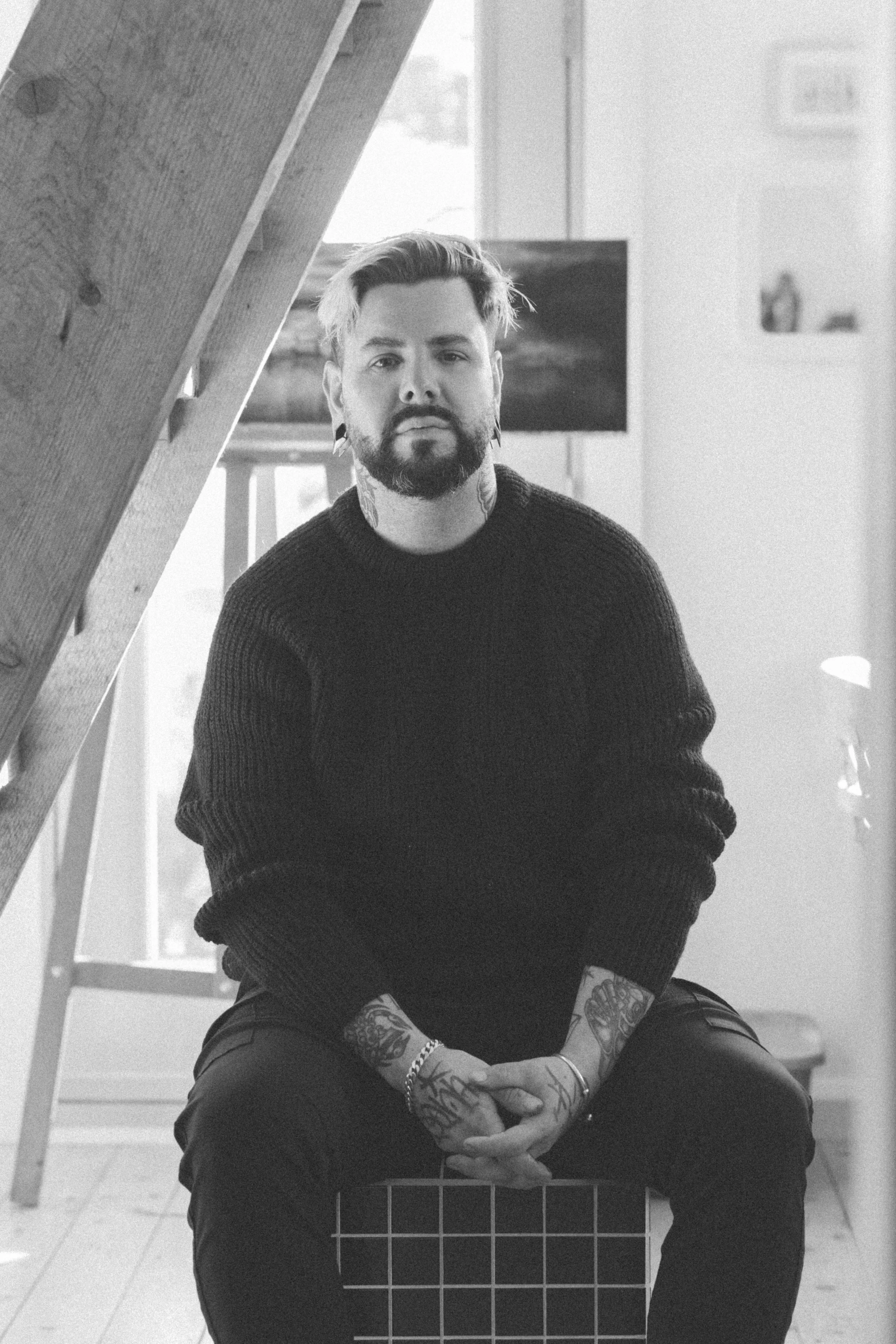
La résidence de Yann Lemieux à The Parcelles n’a pas été marquée par une rupture, mais par un renouveau : celui du geste, de la présence et de la nécessité tranquille de la peinture. Loin des contraintes extérieures, il s’est permis de ralentir, d’observer et de se replonger dans sa pratique avec un regard clair.
Il en est ressorti non seulement de nouvelles œuvres, mais aussi une relation renouvelée à la création elle-même — une relation fondée sur la rigueur, l'ouverture d'esprit et la puissance intemporelle du geste pictural.
Suivez Yann Lemieux / @yann.l.art
Portraits par Catherine Bernier / @cath.be